

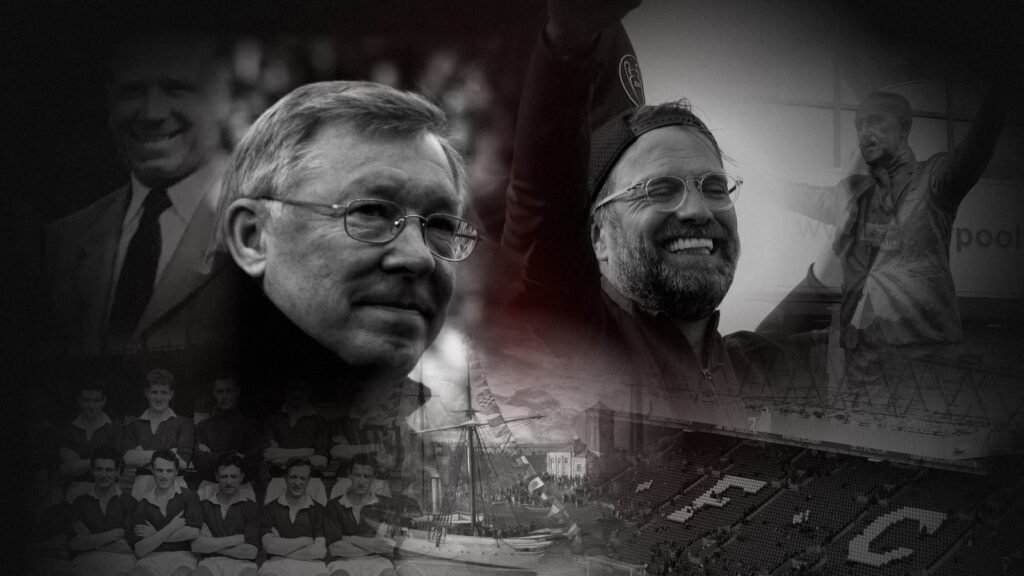
Some rivalries start with a goal. Manchester United vs Liverpool started with a canal. Long before Manchester United and Liverpool were the two most successful clubs in England, Manchester and Liverpool were two cities forty miles apart, fighting over money, trade and pride. The football came later. The resentment was already waiting for it.
I am a Madridista, so I know what it means to belong to a club that believes it was born to win. That is why this rivalry fascinates me. It is the only one in England where both sides genuinely believe they are the greatest club in the country, and both have the trophies to make the argument. That is not a derby. That is a war of succession.
The Canal That Started It
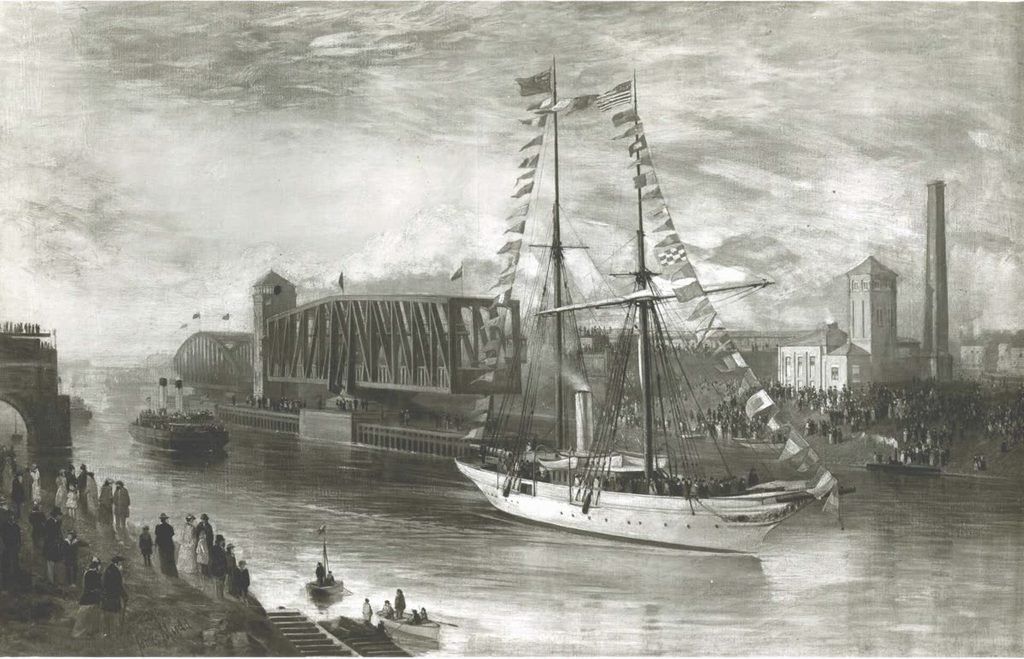
In the nineteenth century, Liverpool was one of the great ports of the world. Almost everything Manchester made, above all its cotton, had to pass through Liverpool’s docks, and Liverpool charged for the privilege. Manchester’s merchants grew tired of paying. So they built their own way to the sea.
The Manchester Ship Canal, funded by Manchester money and opposed by Liverpool’s politicians, was completed in 1894. It let ships sail straight past Liverpool and into Manchester. To the people of Liverpool it was an insult and a threat to their livelihoods. To Manchester it was independence. Workers in both cities felt it in their wages.
Three months later, the two football clubs met for the first time, in a Football League test match at Ewood Park in Blackburn in April 1894. Liverpool won 2-0. The clubs were only a few years old. Liverpool had been founded in 1892, after a row between Everton’s board and the owner of Anfield over the rent. United had started life in 1878 as Newton Heath, a team of railway workers. Neither was yet a giant. But the cities they represented already despised each other.
Good Friday, 1915
The strangest chapter in this rivalry is one where the two clubs were on the same side. On Good Friday, 2 April 1915, United beat Liverpool 2-0 at Old Trafford. It was a fix. With the First World War about to shut the league down, players from both clubs had bet on a 2-0 United win at odds of eight to one, and arranged the result between them.
The truth came out. Seven players, four from Liverpool and three from United, were banned from football for life, though most of the bans were later lifted. The two points kept United in the First Division, one point above Chelsea. Think about that the next time someone tells you this rivalry was always pure hatred. Its most notorious match was a moment when they conspired together.
Busby, Shankly and the Same Roots
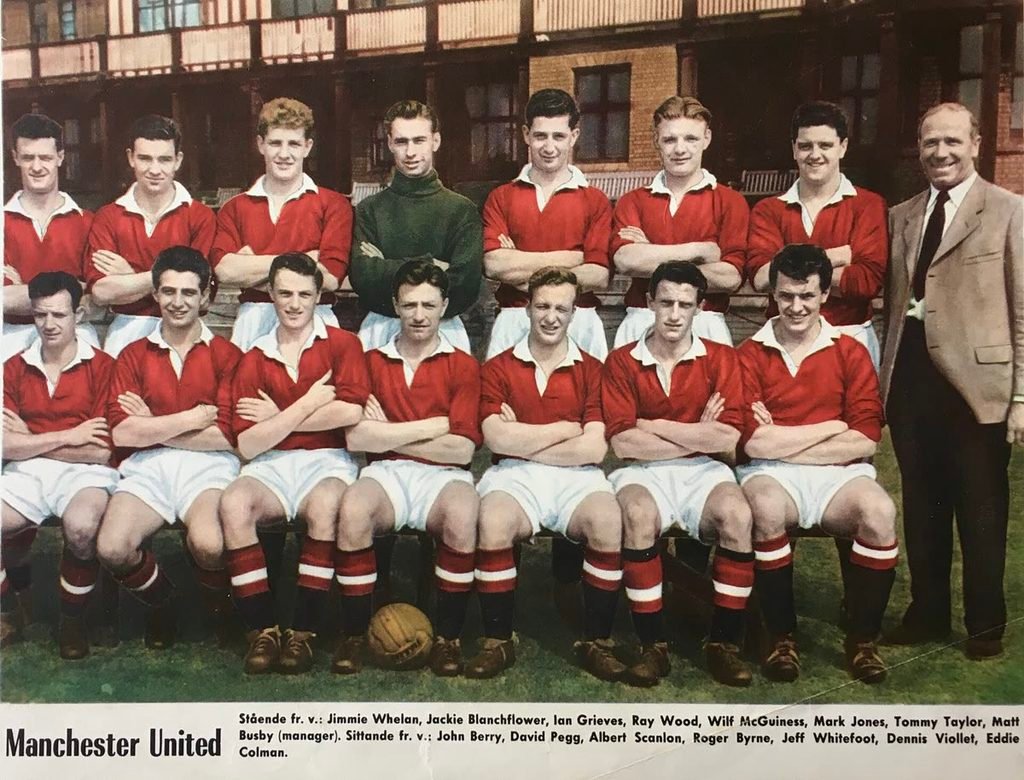
The two men who built the modern versions of these clubs had more in common than either set of fans likes to admit. Matt Busby had been a Liverpool player and captain before he became Manchester United’s manager in 1945. Bill Shankly arrived at Liverpool in 1959. Both were Scots from mining villages. Both believed a football club belonged to its working people.
Busby built three great United teams, and one of them was destroyed. In February 1958, the plane carrying the Busby Babes home from a European Cup tie crashed on take-off at Munich. Twenty-three people died, eight of them United players. Busby himself survived with terrible injuries. Ten years later, in May 1968, his rebuilt side beat Benfica 4-1 after extra time at Wembley, with Bobby Charlton, a Munich survivor, scoring twice. United were the first English club to win the European Cup. Liverpool has its own wound, Hillsborough in 1989, where ninety-seven Liverpool supporters lost their lives. The lowest moments of this rivalry have always been when a few fans sing about the other side’s dead. The best moments are when both clubs stand together against it.
Both clubs believe they are the greatest in England, and both have the trophies to prove it. That is not a derby. That is a war of succession.
The Perch
From the 1970s to the start of the 1990s, English football belonged to Liverpool. Between 1973 and 1992 they won eleven league titles, nineteen domestic cups and seven European trophies, passing the manager’s job from one man to the next inside the famous Boot Room. United, for much of that time, were a big club without a title, watching.
Then came Alex Ferguson. He arrived in 1986, and years later he described his greatest challenge in words that became part of the rivalry itself: knocking Liverpool right off their perch. He did exactly that. United won their first league title in twenty-six years in 1993 and then barely stopped. In 2009 they equalled Liverpool’s eighteen titles. In 2011 they won a nineteenth and moved ahead. By the time Ferguson retired in 2013, he had won thirteen league titles, more than any manager in the history of English football. For the first time in living memory, Liverpool were chasing United, and for a long time they could not catch them.
The rivalry became personal in the Premier League era, too. In the 2011-12 season, Liverpool’s Luis Suárez was banned for eight matches for racially abusing United’s Patrice Evra. When the two met again at Old Trafford in February 2012, Suárez refused to shake Evra’s hand. Suárez and Liverpool apologised the next day, and United accepted. It was a reminder that respect is not automatic in this fixture. It has to be chosen.
Two Nights in Europe
Every great club has a night it tells its children about. These two have nights that could only belong to them, and they are strangely alike.
United’s came in May 1999, at the Camp Nou, in the Champions League final against Bayern Munich. They were losing 1-0 as the ninety minutes ran out. Then, in stoppage time, Teddy Sheringham equalised and Ole Gunnar Solskjær won it. Two goals in a hundred and two seconds completed the treble of league, FA Cup and European Cup, something no English club had ever done.
Liverpool’s came six years later, in Istanbul, against AC Milan. They were 3-0 down at half-time in a Champions League final and looked finished. They scored three times in six minutes in the second half, held on through extra time and won on penalties. Ask a Liverpool fan for the greatest night in their history and they will not need a second to think.
That is the rivalry in miniature. Both clubs are built on the belief that the game is never over. Each has the proof, and each thinks the other’s miracle was luck.
The Border Nobody Crosses
Here is a fact that tells you everything. The last player to transfer directly between Manchester United and Liverpool was Phil Chisnall, who moved from Old Trafford to Anfield in April 1964 for £25,000. Since then, not one. Players have moved from Barcelona to Real Madrid and from Tottenham to Arsenal. Nobody has gone straight from one of these clubs to the other in more than sixty years.
That border is not written in any rule book. It does not need to be. No chairman wants to explain that deal to his supporters.
Twenty Each
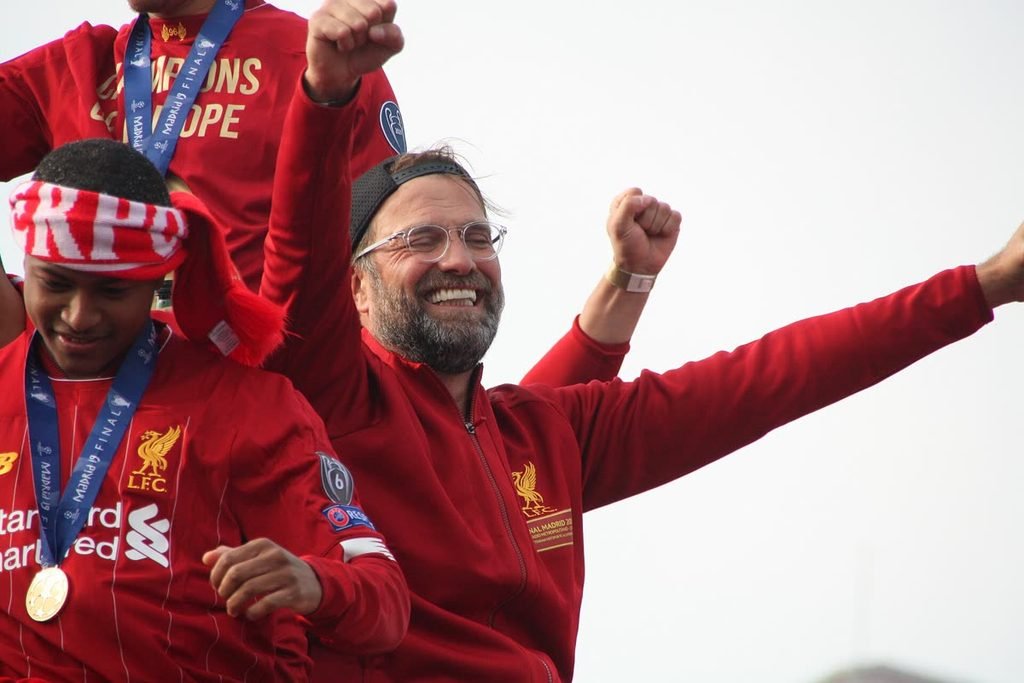
After Ferguson retired in 2013, the pendulum swung back. Jürgen Klopp arrived at Anfield in October 2015 and rebuilt Liverpool into a machine. They won the Champions League in 2019, their sixth European Cup against United’s three. In 2019-20 they won the league for the first time in thirty years, with a club-record ninety-nine points. In March 2023 they beat United 7-0 at Anfield, Liverpool’s biggest competitive win over United. And in 2024-25, in Arne Slot’s first season as manager, they won the league again, their twentieth title.
Twenty each. After more than a century, after all the canals and fixes and perches, the two clubs stand level on English league titles. Even the most recent season refused to separate them cleanly. In 2025-26, United finished third and Liverpool fifth, and neither won the league. United can point to the head-to-head record, which going into this season they led by eighty-five wins to seventy-two with sixty-one draws. Liverpool can point to Europe, where six beats three. Every argument has an answer waiting.
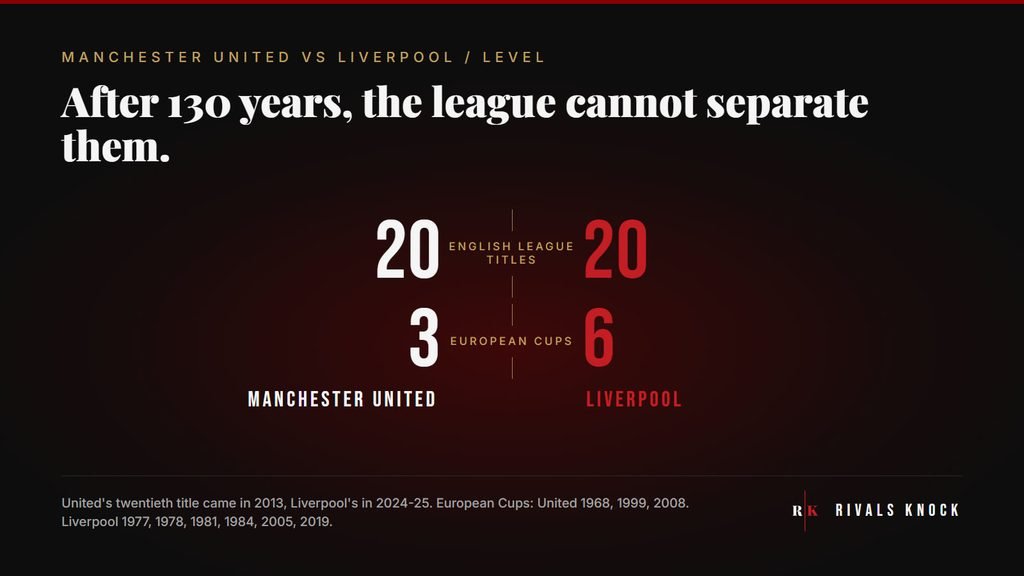
The Verdict: Manchester United vs Liverpool
I come to this from outside England and outside both cities, so nobody can accuse me of a local grudge.
If you force me to choose, I choose Liverpool, and the reason is Europe. League titles are level. The head-to-head belongs to United. But I support a club that measures itself by European Cups, and in that competition Liverpool have been twice as successful. Six is not a small margin. It is a statement.
But I would never say it to a United fan without adding this. United gave English football the Busby Babes, the first English European Cup in 1968 and the greatest sustained era any manager in English football has ever produced. They rebuilt from Munich. No club has a more remarkable story of survival.
Two cities that fought over a canal ended up owning English football between them. They will never agree on which one owns more of it, and they should not. A rivalry without a worthy opponent is just a grudge. This one has had two worthy opponents for a hundred and thirty years.
Your turn. Pick your side.
Sources: Wikipedia (Liverpool F.C.-Manchester United F.C. rivalry), the Western Front Association, NBC Sports. Facts checked 30 September 2026.
The debate
No arguments yet. Start one.
Argue hard, respect the other side. Attack the argument, never the person. Comments that cross that line get removed.