

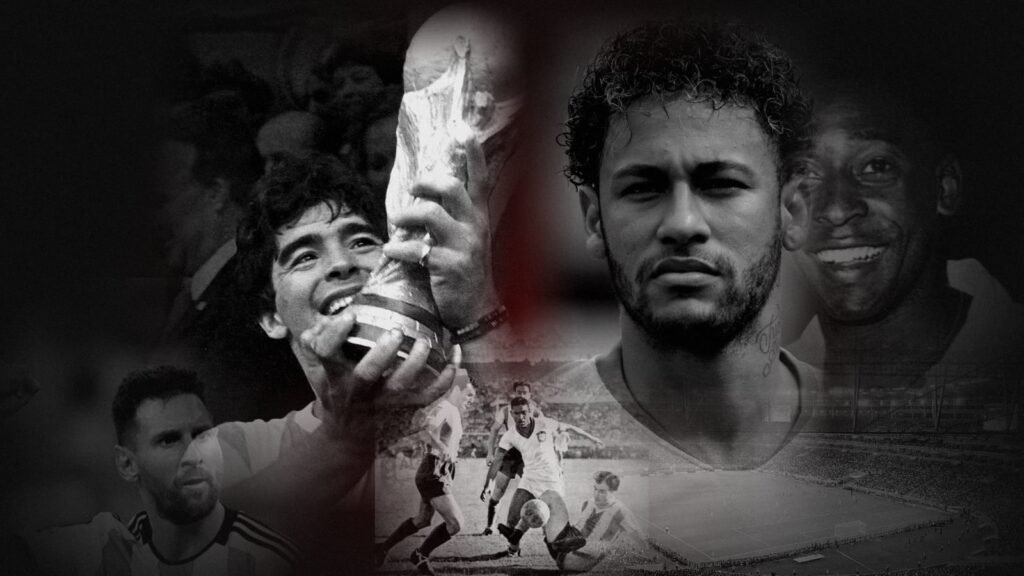
Every rivalry claims to be the oldest, the fiercest, the one that matters most. Argentina vs Brazil has a better claim than most. When Brazil played their first official international match, the opponent was Argentina. The date was 20 September 1914, the place was Buenos Aires, and Argentina won 3-0. Brazil’s national team was born losing to Argentina. Everything since has been an argument about who is really the greater football nation.
My club is Real Madrid, which means I have spent my life watching the best players from both of these countries wear white, and sometimes wear the other colours in Barcelona. I have no flag in this fight. So let me say what fans on both sides rarely admit. Neither country is complete without the other. Brazil taught the world how beautiful football could be. Argentina taught it how much football could hurt. And they learned both lessons from each other.
Two Ideas of the Game
Ask a Brazilian what football is and you will hear about joy. The dribble, the flick, the samba, the jogo bonito. Ask an Argentine and you will hear about grit, cunning and a word they love: garra, the claw, the refusal to lose. It is a cliché, and like most clichés it is half true. Brazil have produced hard men and Argentina have produced artists. But the two countries have always seen themselves in those mirrors, and seen the other as the opposite.
They played each other constantly in the early years. There was even a trophy for it, the Copa Roca, first contested in 1914 and played on and off until 1976, then revived in 2011 as the Superclásico de las Américas. The fixtures were friendly in name only. Neither side ever treated this as a friendly.
The Night in 1946
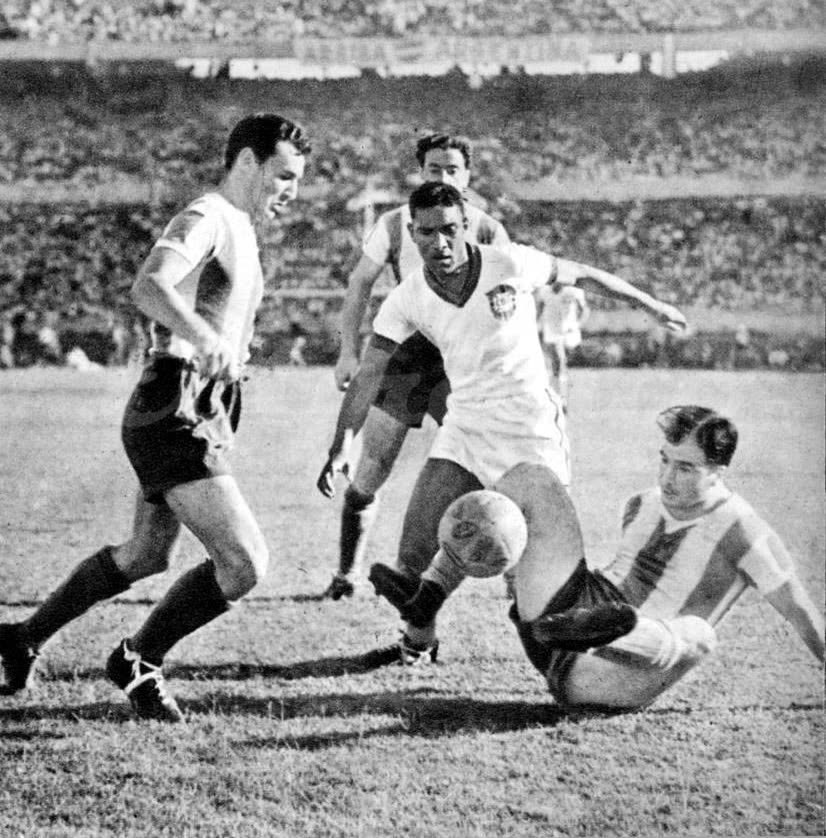
If you want the moment the rivalry turned dark, go to Buenos Aires in 1946, the deciding match of the South American Championship. Twenty-eight minutes in, Brazil’s Jair da Rosa Pinto went into a challenge with Argentina’s captain, José Salomón, and broke his tibia and fibula.
What followed was chaos. Players fought. Around five hundred spectators invaded the pitch, and mounted police were sent in to restore order. When the game eventually resumed, Argentina won 2-0 and took the title. Salomón never fully recovered, and he never played professional football again.
To Argentines, it was proof of Brazilian brutality dressed up as flair. To Brazilians, it was a night of hostility in an enemy stadium where their players feared for their safety. Both memories are real. That is the pattern of this rivalry. Every famous night has two versions, and both countries swear theirs is the true one.
Five Stars and Three
Then Brazil took over the world. They won the World Cup in 1958, 1962 and 1970, with Pelé at the heart of all three, and they did it with a style that made the rest of the planet fall in love with them. The 1970 side is still, for many people, the greatest team ever assembled. Brazil added a fourth star in 1994 and a fifth in 2002. No country has more.
Argentina’s first World Cup came at home in 1978, and it came with a cloud over it. In the second group stage, Argentina needed to beat Peru by four clear goals to reach the final ahead of Brazil. They won 6-0. Brazil went home without losing a game. For decades there were rumours that Peru had been persuaded not to try too hard. Nothing was ever proven, and Argentines resent the suggestion that their first title needed help. But ask a Brazilian about 1978 and watch their face.
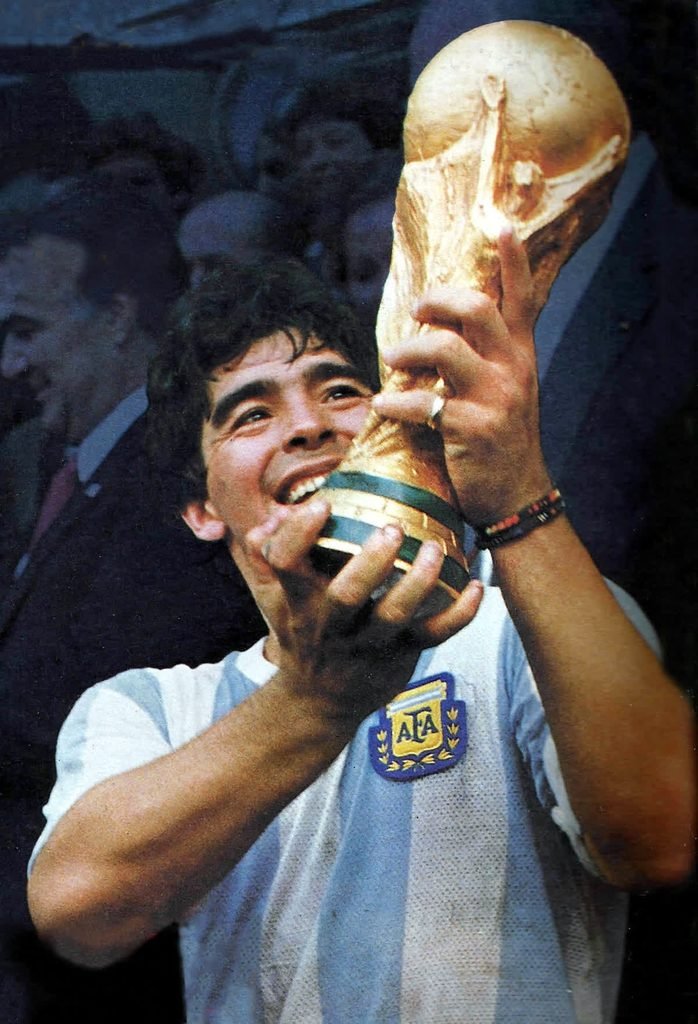
Eight years later, Argentina won again in Mexico, and this time nobody could argue about who had carried them. Diego Maradona.
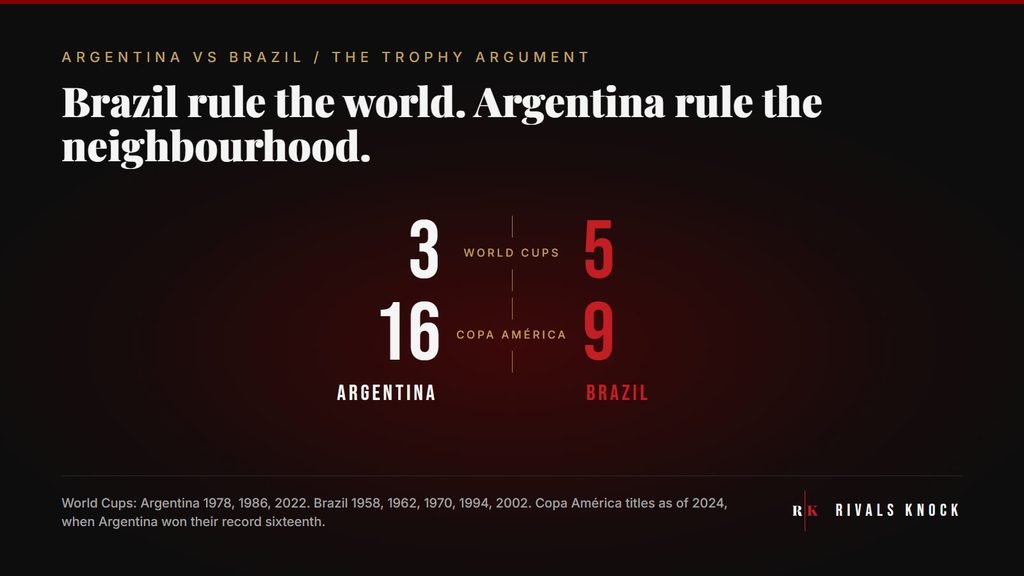
Argentines will point out that the World Cup is not the only measure. In South America’s own championship, the Copa América, the numbers flip completely. Argentina have won it sixteen times, more than anyone, and Brazil nine. Brazil rule the world. Argentina rule the neighbourhood. Each country thinks its trophy is the one that counts.
Brazil taught the world how beautiful football could be. Argentina taught it how much football could hurt.
Pelé or Maradona
Every great rivalry eventually becomes a question about two men. Here it is the oldest argument in football. Pelé won three World Cups, scored more goals than anyone could count and made the number ten shirt sacred. Maradona won one, almost on his own, and did things with a ball that looked impossible even while you were watching them.
In 2000, FIFA tried to settle it with a Player of the Century award. An online vote chose Maradona by a landslide. FIFA then added a second award, chosen by its own panel, which went to Pelé. So they shared it, and nobody on either side accepted the draw. Pelé had already been named Athlete of the Century by the International Olympic Committee. Maradona had the people. Each country still believes its man was the greatest, and each is sure the other is blinded by love.
Holy Water and Heartbreak
In the 1990 World Cup the two met in the round of sixteen in Turin. Brazil dominated for long spells and hit the woodwork. Then Maradona, carrying an injured ankle, drew half the Brazilian team towards him and slipped the ball to Claudio Caniggia, who scored. Argentina won 1-0.
Brazil’s full-back Branco later claimed that during a break in play, the Argentine staff had handed him a water bottle laced with something that made him drowsy. The story became known as the holy water. The Argentine FA and their coach Carlos Bilardo denied it. It has never been settled. It has also never been forgotten.
A View from the Bernabéu
Let me tell you why a Real Madrid fan cares so much about a rivalry between two countries on another continent. Because so much of my club’s story was written by their players. Alfredo Di Stéfano, the man who built Real Madrid into what it is, was born in Buenos Aires and wore Argentina’s shirt before he ever wore ours. Brazil gave the Bernabéu Ronaldo Nazário, Roberto Carlos, Kaká, Marcelo and now Vinícius Júnior.
Every Madridista has cheered for an Argentine and a Brazilian in the same white shirt, sometimes on the same afternoon. That is the strange gift of club football. It lets you love both sides of a rivalry that would never forgive you for it. When Argentina and Brazil meet, half of Madrid is quietly torn.
The Messi Years
After 1990, the balance tilted towards Brazil. Argentina had the best player in the world in Lionel Messi and could not win a senior trophy with him. The criticism was relentless, and much of it came from across the border.
Then came July 2021, the Copa América final, at the Maracanã of all places. Ángel Di María lobbed the goalkeeper and Argentina won 1-0 in Brazil’s most sacred stadium. It was Argentina’s first Copa América in twenty-eight years and Messi’s first senior trophy with his country. The picture of Messi embracing a tearful Neymar, his friend and former Barcelona teammate, is one of the finest images this rivalry has ever produced. Two rivals, one moment of respect.
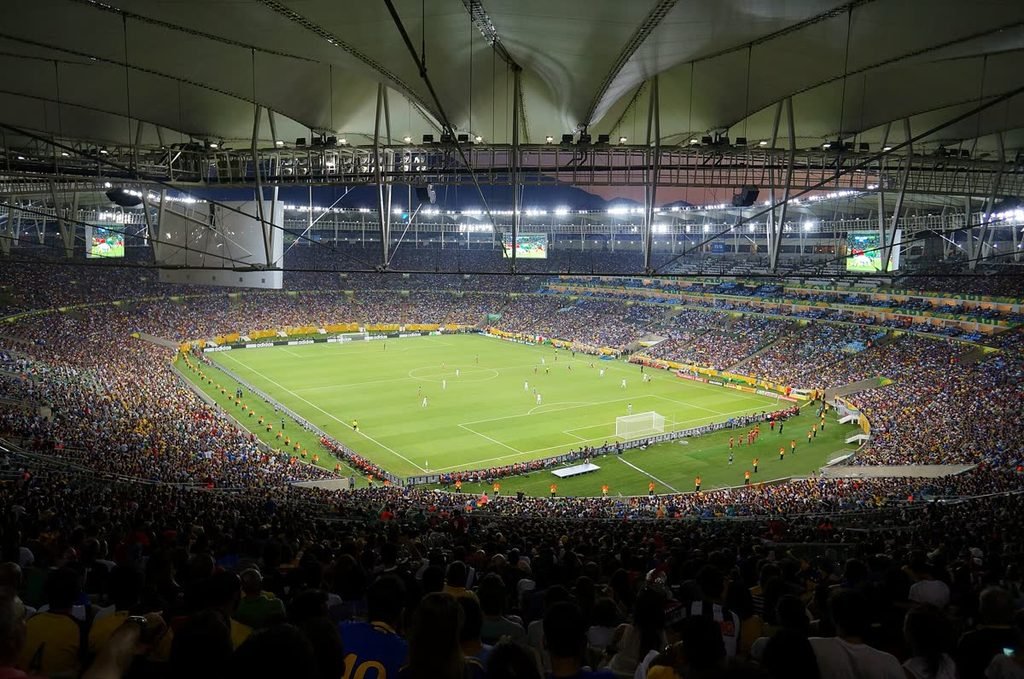
Argentina went on to win the 2022 World Cup in Qatar. In November 2023 they went back to the Maracanã for a World Cup qualifier that was delayed by violence in the stands, and won 1-0 again. It was the first time Brazil had ever lost a home World Cup qualifier, after fifty-one wins and thirteen draws. In March 2025 Argentina beat them 4-1 in Buenos Aires, Brazil’s heaviest defeat in qualifying, and Brazil sacked their coach.
Where Argentina vs Brazil Stands Now
The 2026 World Cup was supposed to be the tournament where they finally met again on the biggest stage. It never happened. Brazil were knocked out in the round of sixteen by Norway, their earliest exit since 1990. Argentina reached the final and lost 1-0 to Spain after extra time. Brazilians could at least enjoy watching Argentina lose a final. But both countries went home without the trophy, and both knew the other had not won it either.
Even the head-to-head record is an argument. Depending on which matches you count as official, either Argentina or Brazil is ahead, by one or two wins over more than eighty games. Both football associations have their own numbers. Of course they do.
The Verdict
So who is the greater football nation? Here is my verdict, from someone who has no reason to lie to either of them.
Brazil won the century. Five World Cups against three, the most loved teams in history, and Pelé. If you are measuring the whole story, the crown is yellow.
But Argentina are winning the decade, and they are winning it against Brazil directly. Maracanã in 2021, Maracanã again in 2023, 4-1 in 2025. A rivalry is not a museum. It is decided by who is winning when the two sides meet, and right now that is Argentina.
That is what makes this the greatest international rivalry in the world. It has never stayed settled for longer than a generation. Brazil were born losing to Argentina in 1914. Every time since that one has looked finished, the other has come back.
Your turn. Pick your side.
Sources: Wikipedia (Argentina-Brazil football rivalry, Brazil national football team), FIFA, CBS, ABC, beIN Sports, Sky Sports. Facts checked 30 September 2026.
The debate
No arguments yet. Start one.
Argue hard, respect the other side. Attack the argument, never the person. Comments that cross that line get removed.