

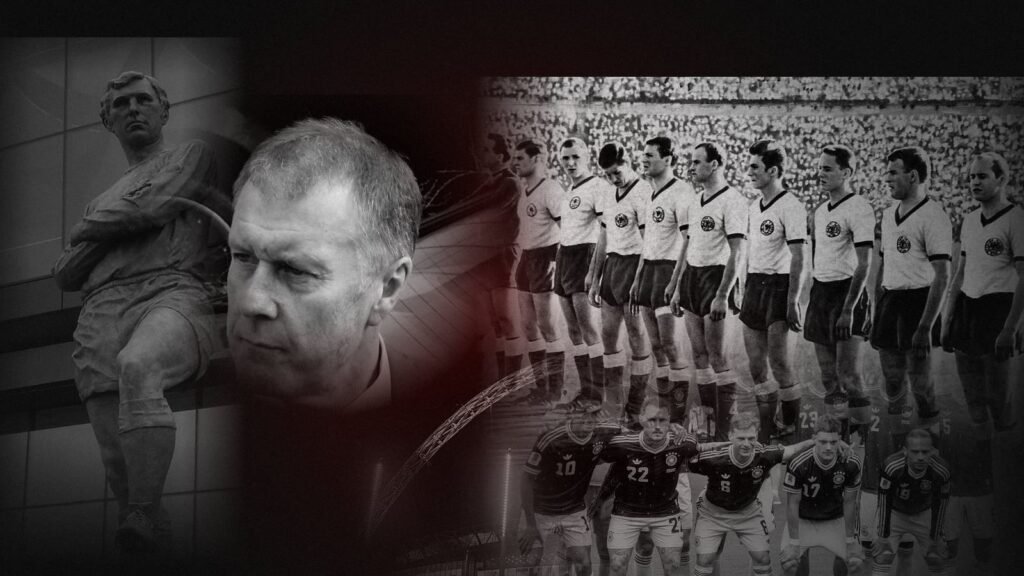
Every England fan knows the chant. Two world wars and one World Cup, sung to the tune of Camptown Races, at games against Germany for decades. Now ask a German fan who their great rival is. Most will say the Netherlands. Some will say Italy. Very few will say England.
In 2001, after England had just beaten them 5-1 in Munich, German fans sang a song of their own. It was about the Dutch, who had failed to qualify. We’re going to the World Cup without Holland. Even on their worst night against England, they were thinking about someone else.
So England vs Germany is a strange rivalry. One side lives it. The other mostly watches it happen. I have no side to defend in this one, and the reason is not hard to find. It is in five nights.
1966: The Goal Nobody Can Prove
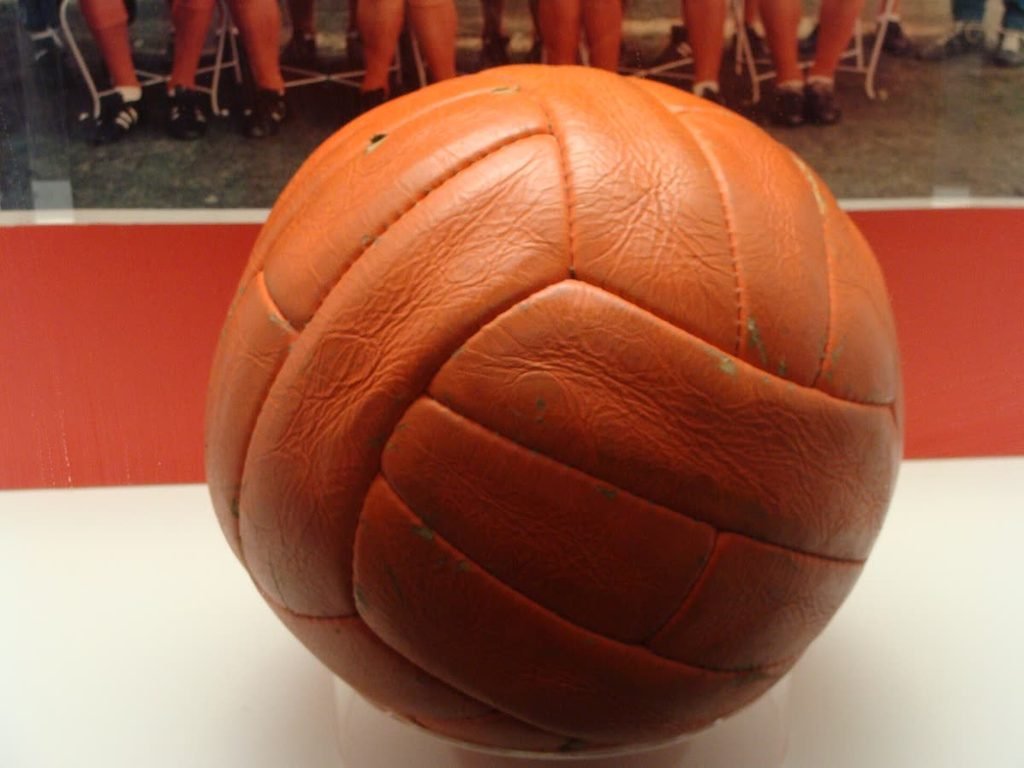
Wembley, 30 July 1966, the World Cup final. England led 2-1 until the very last moments of normal time, when West Germany equalised. In extra time Geoff Hurst hit the underside of the crossbar, and the ball bounced down on or behind the line. The referee asked his linesman, Tofiq Bahramov. Bahramov said goal.
England called him the Russian linesman. He was from Azerbaijan. Studies since, at Imperial College and Oxford, have suggested the ball needed a few more centimetres to cross the line. In Germany a goal that should not have counted is still called a Wembley-Tor. Hurst added a fourth, the first hat-trick in a World Cup final, and England were world champions for the only time.
That is where the English side of this rivalry was born. It is also where the German side began to keep score.
1970: Two Goals Up in León
Four years later, in the World Cup quarter-final in Mexico, England led 2-0. Gordon Banks, the best goalkeeper in the world, had been taken ill before the game, and Peter Bonetti played instead. Franz Beckenbauer pulled one back. Uwe Seeler headed the equaliser. In extra time Gerd Müller scored the winner, 3-2.
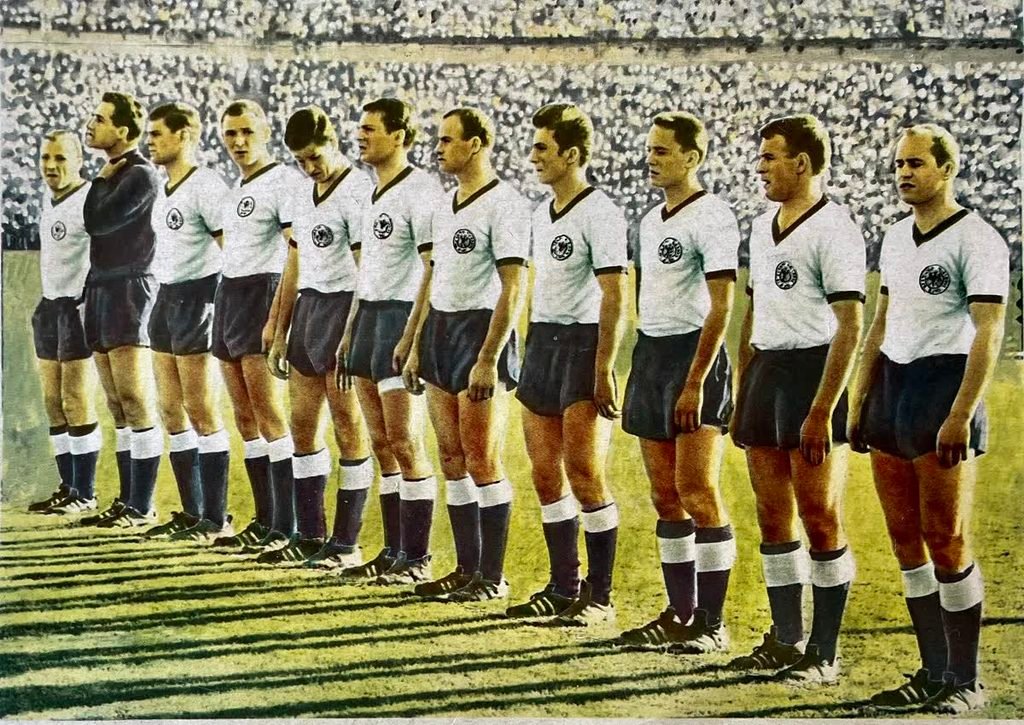
England had beaten West Germany in a final. West Germany had now beaten England from two goals down. The next forty years would belong to that second story.
1990 and 1996: The Penalties
Turin, 4 July 1990, the World Cup semi-final. Andreas Brehme’s free kick took a deflection and looped over Peter Shilton. Gary Lineker equalised ten minutes from time. In extra time Paul Gascoigne was booked, his second yellow card of the tournament, and he realised he would miss the final if England got there. He cried on the pitch. They did not get there. Stuart Pearce and Chris Waddle missed in England’s first ever penalty shootout, and West Germany won it 4-3. They went on to win the World Cup.
Six years later it happened again, at Wembley, in the semi-final of Euro 96. Alan Shearer scored in the third minute. Stefan Kuntz equalised. It went to penalties, all ten scored, and then sudden death. Gareth Southgate’s kick was saved. Andreas Möller scored. Germany went on to win the tournament.
England built a rivalry out of the nights they lost. Germany never needed one, because they kept winning them.
Munich and Bloemfontein
There were bright moments for England. On 1 September 2001, in a World Cup qualifier in Munich, England won 5-1 and Michael Owen scored a hat-trick. Karl-Heinz Rummenigge called it a new Waterloo. It was the biggest win either side has ever had in this fixture.
But in the tournaments that mattered, the pattern held. In Bloemfontein at the 2010 World Cup, with Germany 2-1 up, Frank Lampard’s shot hit the bar and bounced over the line. Neither the referee nor his assistant saw it. Germany won 4-1. Sepp Blatter apologised, and football finally started talking seriously about goal-line technology. Forty-four years after Wembley, the ghost goal had gone the other way.
2021: The Spell Breaks
Then, on 29 June 2021 at Wembley, in the last sixteen of the delayed Euro 2020, England won 2-0 with two late goals from Raheem Sterling and Harry Kane. It was England’s first knockout win over Germany at a tournament since 1966. Fifty-five years. The manager was Gareth Southgate, the man who had missed in 1996.
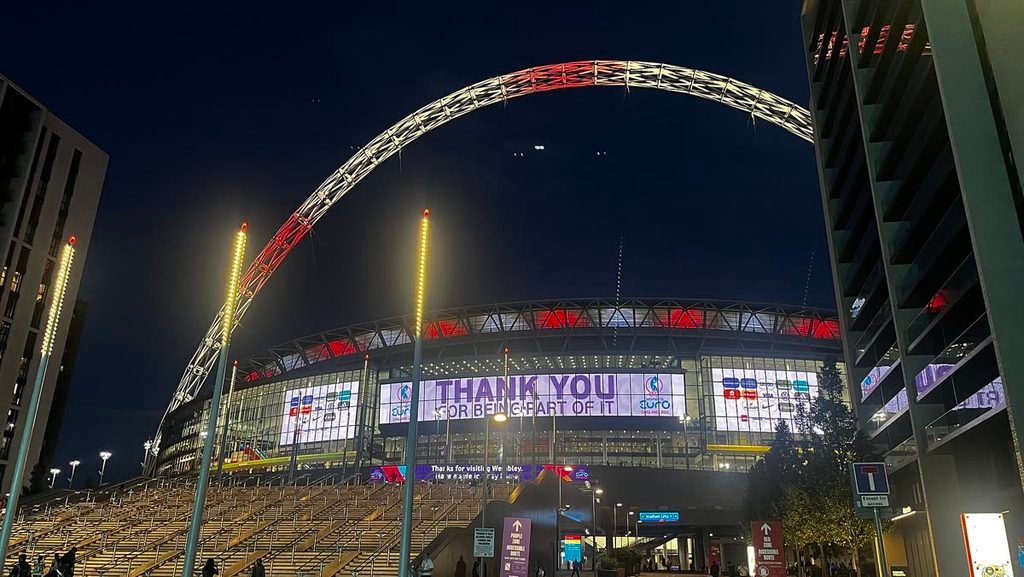
A year later the women finished the job. Germany had dominated women’s football in Europe for decades and had beaten England 6-2 in the 2009 European Championship final. On 31 July 2022 at Wembley, in front of 87,192 people, a record for any European Championship final, England beat Germany 2-1 after extra time. Ella Toone chipped the first, Lina Magull equalised, and Chloe Kelly scored the winner in the 110th minute.
Where England vs Germany Stands Now
The 2026 World Cup made the change hard to miss. Germany went out in their first knockout match, to Paraguay on penalties: their first ever shootout defeat at a World Cup. After Turin and Wembley, the irony was not lost on anyone in England. England, under Thomas Tuchel, went to the Azteca in the last sixteen and beat Mexico 3-2. Jude Bellingham scored twice, and as a Real Madrid fan I was very happy to see it. They reached the semi-final and led Argentina through Anthony Gordon, before Lionel Messi set up two late goals and Argentina won 2-1. England beat France to finish third.
Third is not a trophy. But for the first time in a generation, England went into a tournament looking like the stronger of the two.
The Verdict: Why England Care More
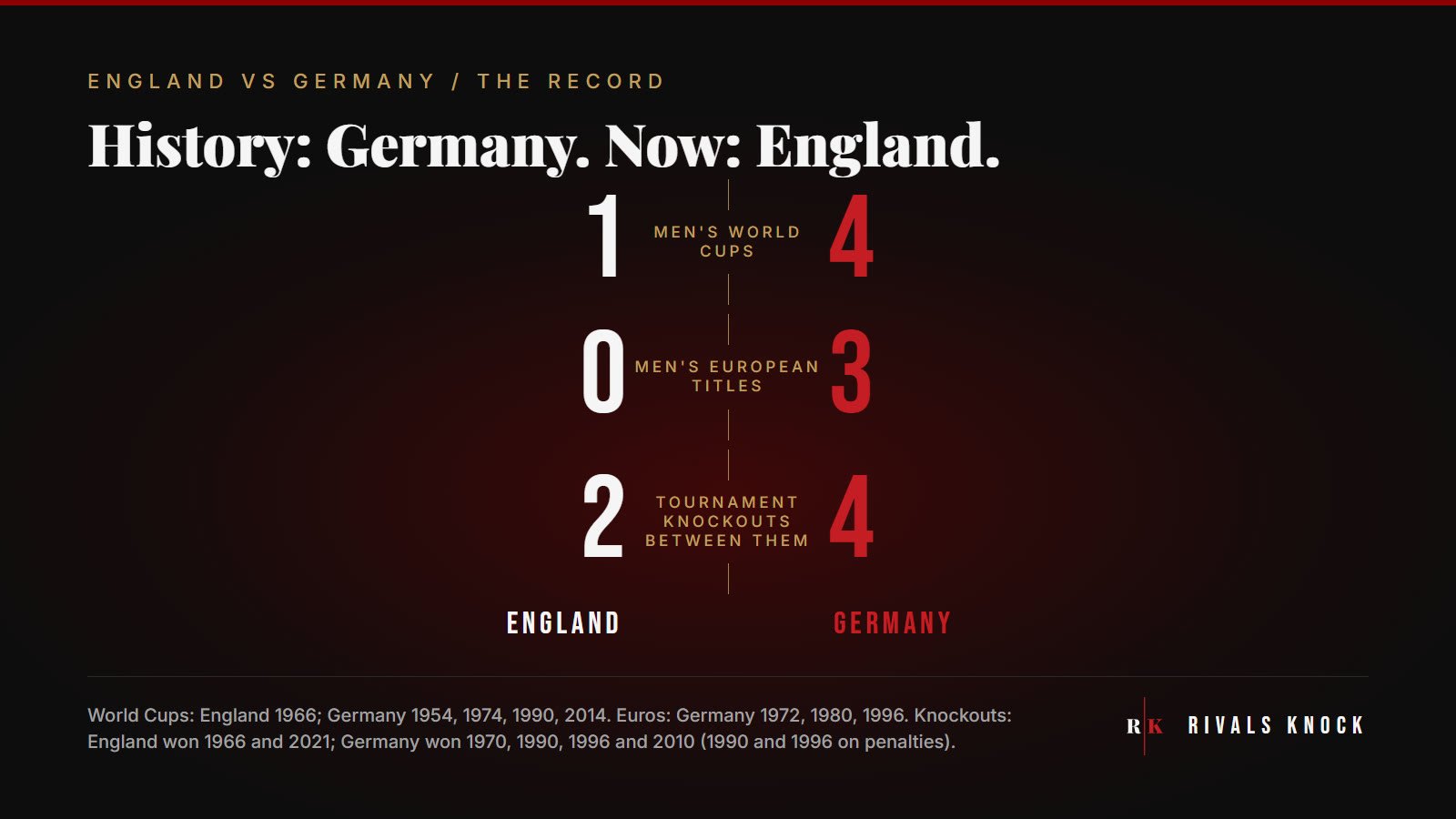
On history, this rivalry belongs to Germany, and it is not close. Four World Cups to one. Three European Championships to none. And of the six tournament knockout games between them, Germany won four.
That is exactly why England care more. You do not build songs about the team you beat. You build them about the team that keeps beating you, and for forty-four years after 1966 that was Germany. The Germans never needed England as an enemy, because England were rarely the team that stopped them. The Dutch were. The Italians were.
But Germany should not get comfortable. Wembley in 2021, Wembley again in 2022 and the World Cup of 2026 all point the same way. England finally have nights of their own to remember against Germany that are not from 1966. If that continues, one day the Germans may start caring about England vs Germany too. And then this will be a real rivalry, on both sides.
Your turn. Pick your side.
The debate
No arguments yet. Start one.
Argue hard, respect the other side. Attack the argument, never the person. Comments that cross that line get removed.