

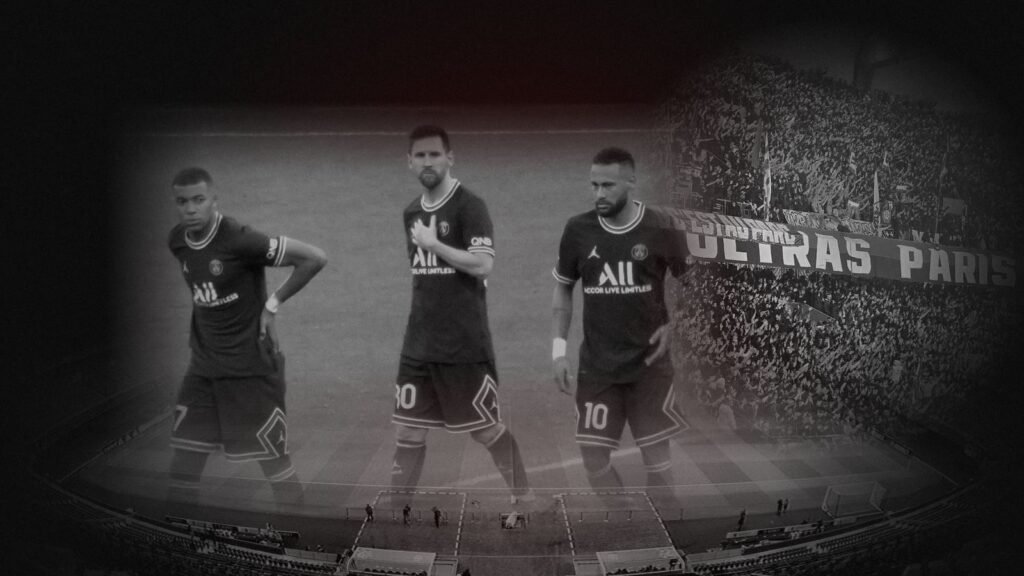
On 30 May 2026, in Budapest, Paris Saint-Germain beat Arsenal on penalties and won the Champions League for the second year in a row. Only one club had done that before in the Champions League era. Real Madrid won three in a row between 2016 and 2018.
And still, every time PSG win, somebody asks the same question. Is PSG a real football club, or a very expensive project that happens to play football?
It is a fair question. It is also a lazy one if you only ask it one way. So let me take it seriously, as a Madridista who knows exactly what people say about his own club and its money.
The Case Against
Let’s start with what the critics say, because they are not making it up.
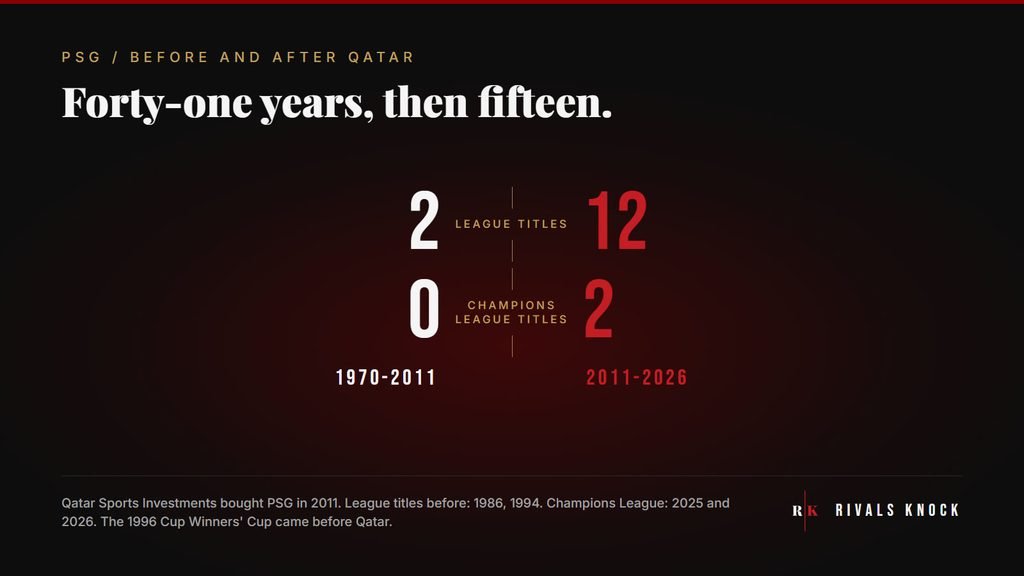
In 2011, Qatar Sports Investments, part of Qatar’s sovereign wealth fund, bought the club. Nasser Al-Khelaifi became president. Within a few years, PSG were signing players nobody else in France could afford, and in 2017 they paid Barcelona 222 million euros for Neymar, the biggest transfer fee the sport had ever seen. The same summer, they brought in Kylian Mbappé from Monaco.
That is the heart of the argument. Real Madrid is owned by its members. Manchester United and Liverpool are owned by investors who want a return. PSG is owned, in effect, by a state. The money does not have to make sense, because the point is not profit. Critics call it sportswashing: using a football club to polish a country’s image. You do not have to agree with every word of that to see why it makes people uncomfortable.
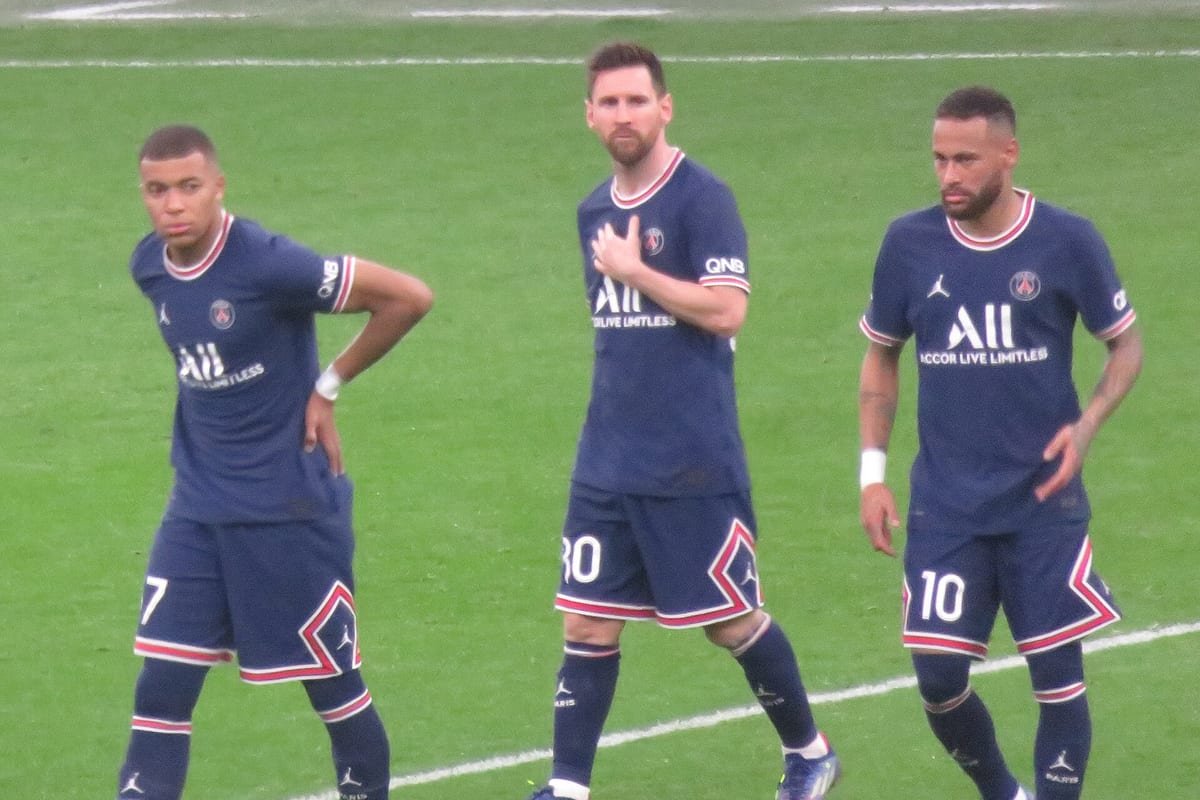
And for a long time the money did not even work. Neymar, Mbappé and then Lionel Messi, who arrived in 2021, played together for two seasons. Three of the best attackers on the planet, and PSG could not get past the round of 16. It looked like a club that had bought a team photo, not a team.
The night that summed it up came in March 2017. PSG beat Barcelona 4-0 in Paris in the first leg of the round of 16. In the second leg at the Camp Nou, they lost 6-1. Three Barcelona goals in the last seven minutes. The richest squad in France, with a four-goal lead, and it fell apart. Money can buy players. It cannot buy the calm that comes from having been there before.
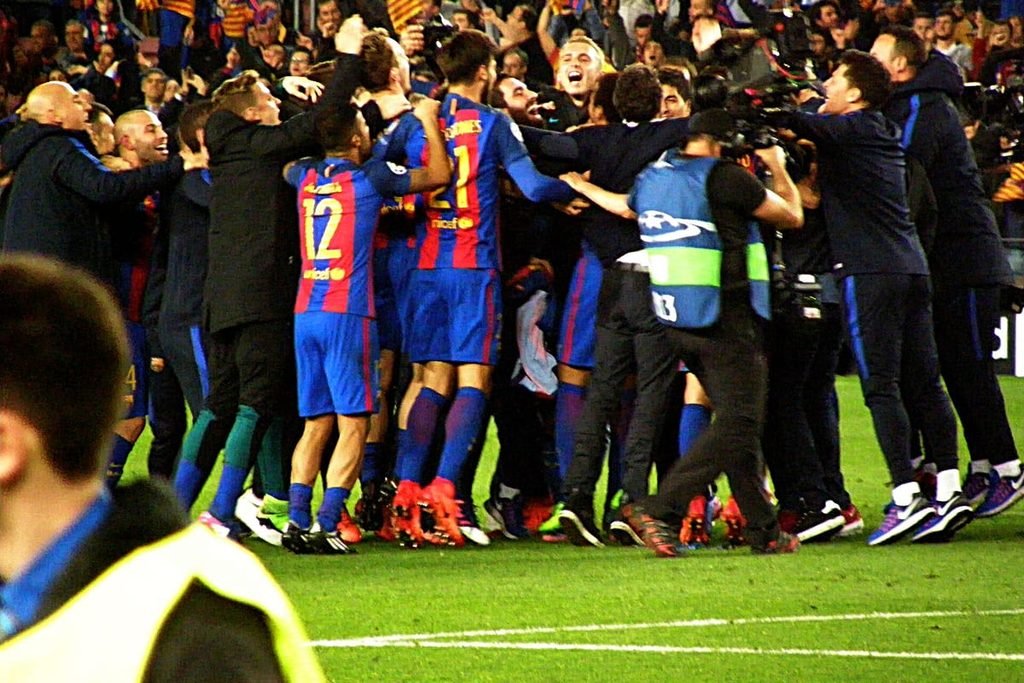
PSG spent a decade trying to buy the Champions League. Then they stopped buying stars and built a team, and it worked.
The Case For
Here’s the thing. PSG did not appear in 2011. The club was founded on 12 August 1970, from a merger of Paris FC and Stade Saint-Germain, because Paris, one of the great cities of the world, did not have a big football club. Within two years the two halves had split. PSG dropped to the third division and had to climb back.
They won their first league title in 1986. In 1996 they won the Cup Winners’ Cup, beating Rapid Vienna in the final, fifteen years before anybody from Qatar was involved. In the 1990s, under Canal+, the Parc des Princes watched George Weah, Raí and David Ginola. That is not a project. That is a history.
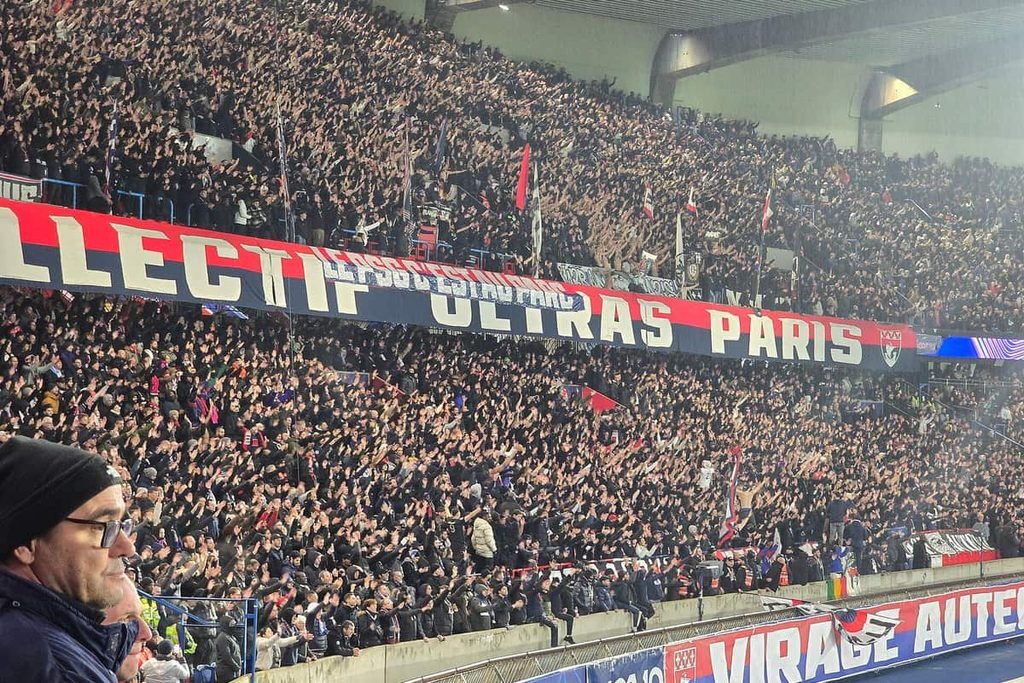
And the supporters are real. The Parc has been their home since 1974, and on a big European night it is one of the loudest grounds in Europe. After violence in 2010, the club broke up its ultra groups and kept them out for six years. They came back in 2016 and the noise came back with them. You do not wait six years for a project. You wait for a club you love.
There is even a proper Paris derby again. Paris FC, the other half of that 1970 merger, came back up to the top flight in 2025. In January 2026 they won 1-0 at the Parc des Princes and knocked PSG out of the Coupe de France. The goal was scored by Jonathan Ikoné, who grew up in PSG’s own academy. Ask any PSG supporter whether that one hurt. Projects do not have neighbours they hate losing to. Clubs do.
What Changed
The strange twist in this story is that PSG only became kings of Europe when they stopped acting like the thing their critics described.
Neymar left in 2023. Messi left the same summer. In 2024, Mbappé left on a free transfer, to my club. The superstar era was over, and a lot of people expected PSG to fall apart. Instead, Luis Enrique built a team. Young, hungry, relentless players like Vitinha, Désiré Doué, Achraf Hakimi and Ousmane Dembélé, who pressed as a unit and ran for each other.
In May 2025, in Munich, they beat Inter 5-0 in the Champions League final. It was the biggest winning margin in the history of European Cup finals. A year later they beat Arsenal in Budapest, Vitinha was named man of the final, and PSG became back-to-back champions. It had taken fourteen years and more than a billion euros, but the trophy finally came when the club looked less like a collection and more like a football team.
Nobody talks about this enough. The PSG that won Europe was the least PSG-like PSG of the Qatar era.
The Verdict: Is PSG a Real Football Club?
So, is PSG a real football club? Yes. And I say that without hesitation.
A real club is not defined by who owns it this decade. It is defined by its history, its city and the people who stand in its stadium every other week. PSG has all three. The supporters in the Parc were there before the money, and they will be there after it.
But I will not pretend the ownership question goes away because they won. It does not. A club owned by a state plays a different game from everyone else, and football has not found a fair answer to that yet. Madrid fans should be honest here too. We have spent huge money on galácticos. The difference is who is paying, and what they want in return.
PSG is a real club with a real problem. Both things are true. The fact that they finally won the right way, with a team instead of a shopping list, is the best argument they have ever made for themselves.
Your turn. Pick your side.
The debate
No arguments yet. Start one.
Argue hard, respect the other side. Attack the argument, never the person. Comments that cross that line get removed.