

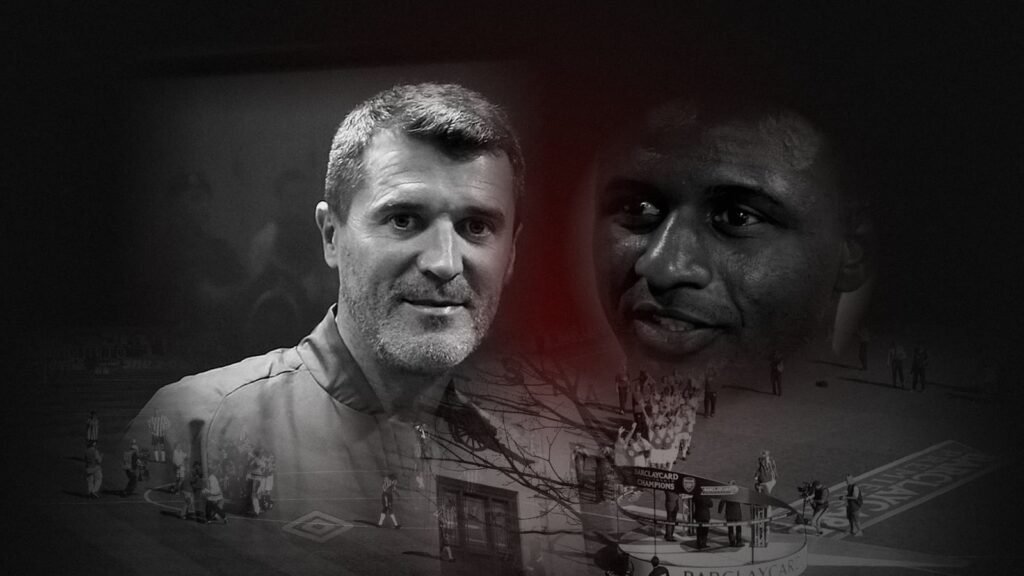
There is a piece of footage from Highbury on 1 February 2005 that every football fan of a certain age can play in their head. A narrow tunnel. Two teams lined up side by side. Roy Keane, finger pointing, face like thunder, being held back by the referee Graham Poll. Patrick Vieira, a head taller, staring back. Keane shouting that they would see out there.
Nobody needed a translation. For eight years, the title race in England had been decided in the middle of the pitch, between those two men. That night in the tunnel was just the part the cameras happened to catch. The argument it started, Keane or Vieira, has never really ended.
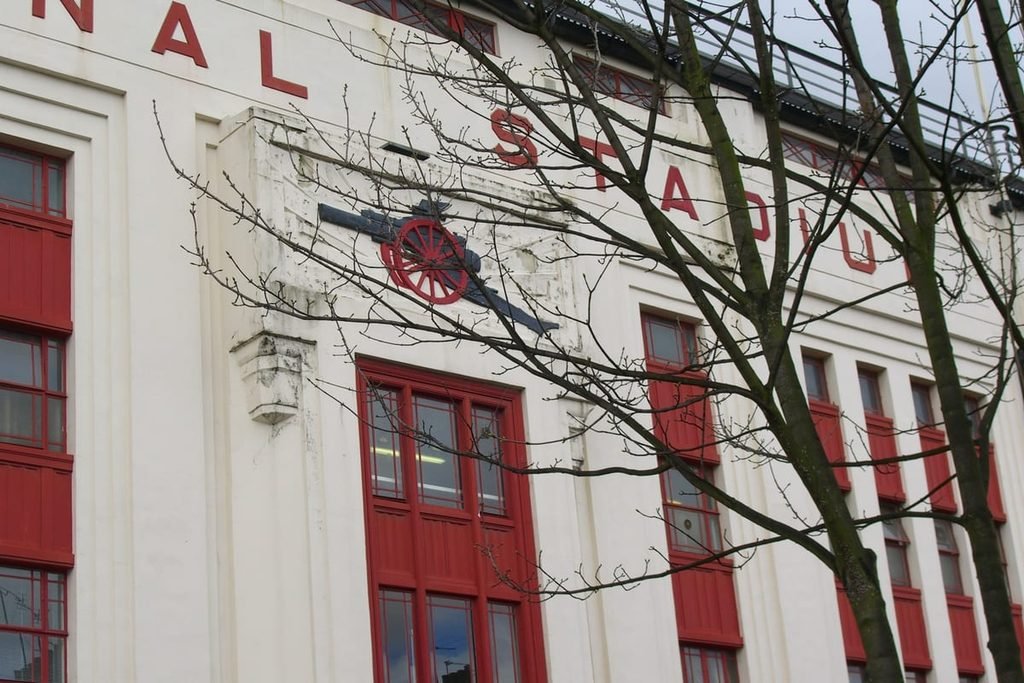
I have no side in this one. My club plays in Madrid, and that makes it easier to be honest. And the question is not who was the better player. It is who was the better captain. Those are different things.
Two Men Built for War
Keane arrived at Manchester United from Nottingham Forest in 1993 for £3.75 million, a British record at the time. When Eric Cantona retired in 1997, Alex Ferguson gave him the armband. He would keep it until he left the club in November 2005.
Vieira arrived at Arsenal from AC Milan in August 1996, a twenty-year-old who had barely played in Italy. Arsène Wenger had not even officially started as manager yet. Within two seasons, Vieira was running the midfield of a team that won the league and FA Cup double. He was given the captaincy in 2002.
They were not the same kind of player. Keane was a controller and an enforcer, a man who made the simple pass at the right moment and made sure everyone around him did their job. Vieira was all legs and power, a midfielder who could win the ball on the edge of his own box and be in the other one five seconds later. Put them on the same pitch and something had to give. Usually, it was somebody’s shin.
The Nights That Defined Them
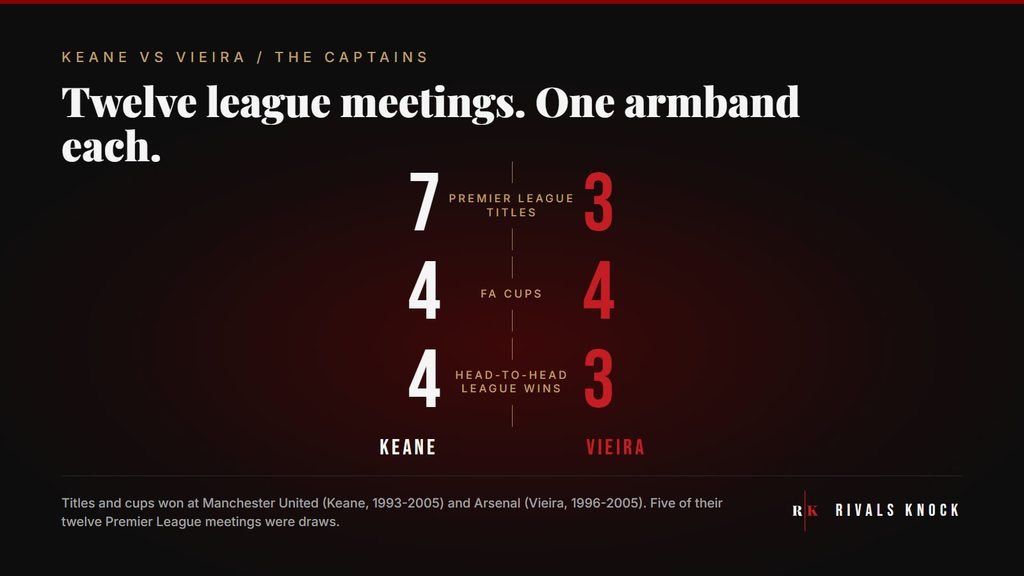
Here’s the thing. Every great rivalry has a scoreboard, and theirs is closer than people remember. In the Premier League, the two captains met twelve times. United won four, Arsenal won three, and five were draws.
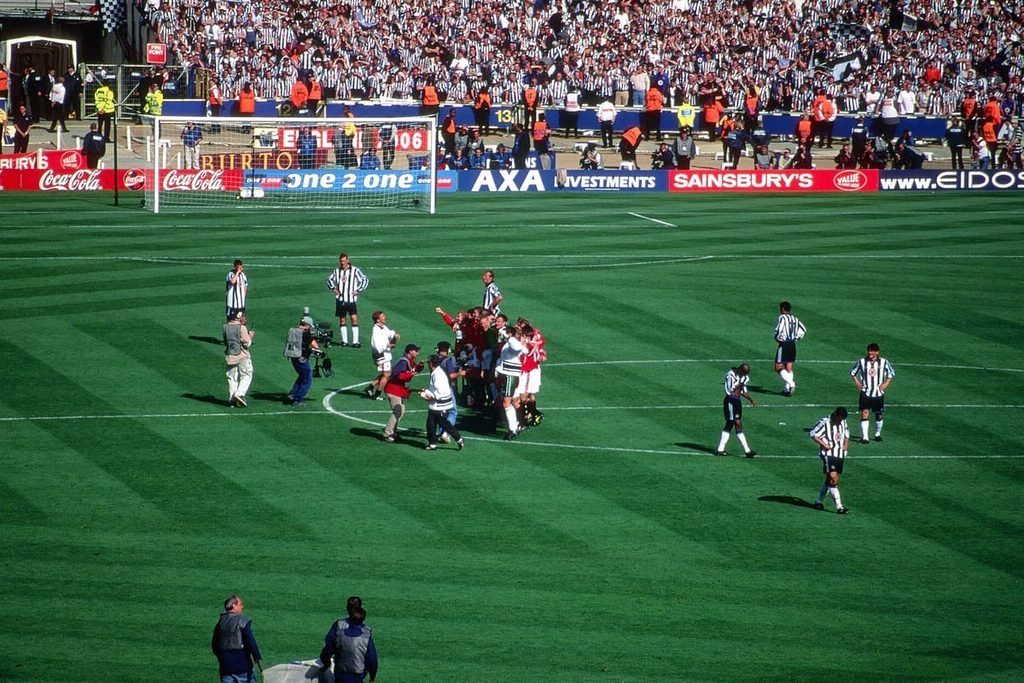
In April 1999, in an FA Cup semi-final replay at Villa Park, Keane was sent off. It was Vieira’s misplaced pass that Ryan Giggs picked up before running through half the Arsenal team to score one of the greatest goals the competition has ever seen. United went on to win the treble.
In September 2003, at Old Trafford, it was Vieira’s turn. He was sent off for kicking out at Ruud van Nistelrooy, and when Van Nistelrooy missed a late penalty, Arsenal players surrounded him. It became known as the Battle of Old Trafford. It was also the season Arsenal went the whole league campaign unbeaten, with Vieira as captain. The Invincibles. No team had done it in England for more than a century.
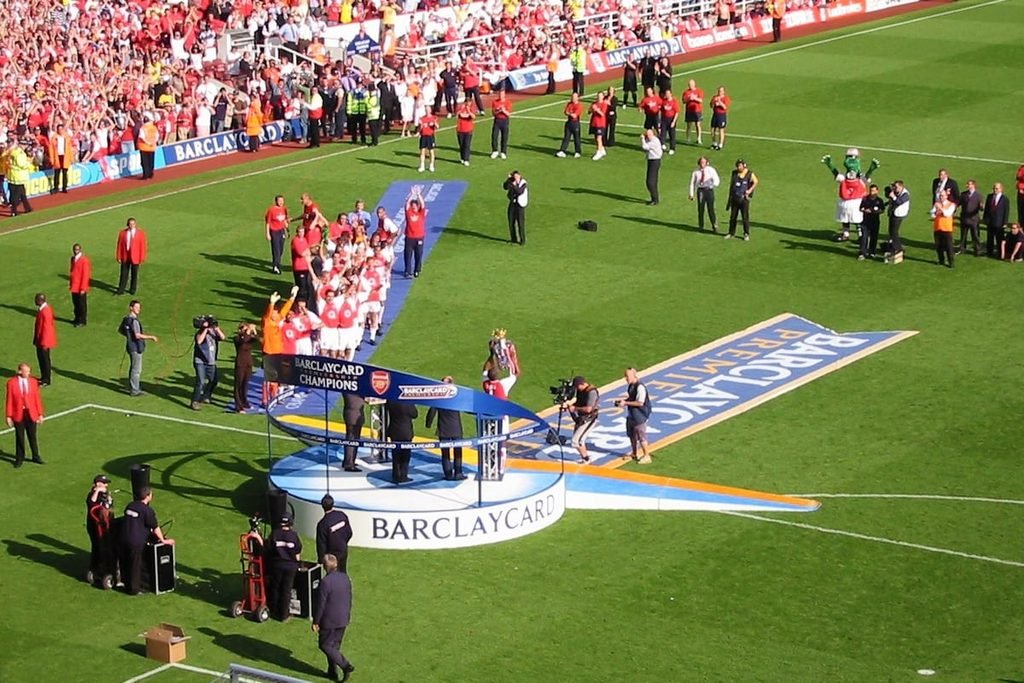
Keane made the players around him better by refusing to let them be anything less. Vieira made them better by being the best player on the pitch.
And then there was Cardiff, May 2005. The FA Cup final, both men captaining their clubs, United the better side all afternoon. It finished 0-0. In the penalty shootout, Vieira stepped up to take Arsenal’s fifth and scored the winner. It was his last kick for Arsenal. That summer he left for Juventus. A few months later, Keane was gone from United too. An era ended in the space of a year.
What Made Keane a Captain
If you want to understand Keane as a captain, you do not look at a trophy. You look at Turin, April 1999. United were 2-0 down to Juventus in the Champions League semi-final and going out. Keane headed the first goal back. Then he was booked, a yellow card that meant he would miss the final if United got there.
He knew it. And he played the rest of that match as if the final did not matter to him at all, only the team getting there. United won 3-2. Keane watched the final against Bayern Munich from the stands. Ferguson later called it the most selfless performance he had ever seen from a player.
That was Keane. Seven league titles, four FA Cups and a Champions League. Nine major honours as captain, more than any skipper in United’s history. He did not just lead the team. He set the standard every day in training, and if you dropped below it, you heard about it.
It had a dark side. The tackle on Alf-Inge Haaland in 2001, and the autobiography where he admitted he meant to hurt him. The walkout from the Ireland squad in Saipan before the 2002 World Cup. The interview criticising his own teammates that ended his time at United. The fire that made him great also burned the people around him.
What Made Vieira a Captain
Vieira led differently. He led by example with the ball, not with his voice. When Arsenal needed someone to take the game by the throat, it was Vieira who did it, driving forward, winning tackles, making the pass that broke the press.
He also had the bigger international career. He won the 1998 World Cup with France, setting up Emmanuel Petit’s goal in the final, and Euro 2000 two years later. He earned 107 caps and captained his country. At Arsenal he won three league titles and four FA Cups, and captained the only unbeaten league season of the modern era.
He had his own red cards and his own bans. But nobody at Arsenal ever said Vieira made them afraid. They said he made them feel like they could not lose.
The Verdict: Keane or Vieira?
If the question were who was the better footballer, I would take Vieira, and I do not think it is close. He could do everything Keane could do, and then do things with the ball Keane never tried.
But the question is captaincy, and my answer is Keane.
A captain is the man who drags a team through the night when the football is not working. Nobody in the Premier League era did that better than Keane. Turin is the proof. He gave up his own final so his team could reach it, and he did not complain once. More trophies, more years with the armband, and a standard so high that his teammates still talk about it today.
Vieira was the better player. Keane was the better captain. And the best part is that neither of them would have been quite as good without the other one standing in the tunnel.
There is one more twist. After that night at Highbury, Keane criticised Vieira for choosing to play for France instead of Senegal, the country where he was born. In August 2026, Vieira was appointed head coach of Senegal. Football always finds a way to have the last word.
Your turn. Pick your side.
The debate
No arguments yet. Start one.
Argue hard, respect the other side. Attack the argument, never the person. Comments that cross that line get removed.