

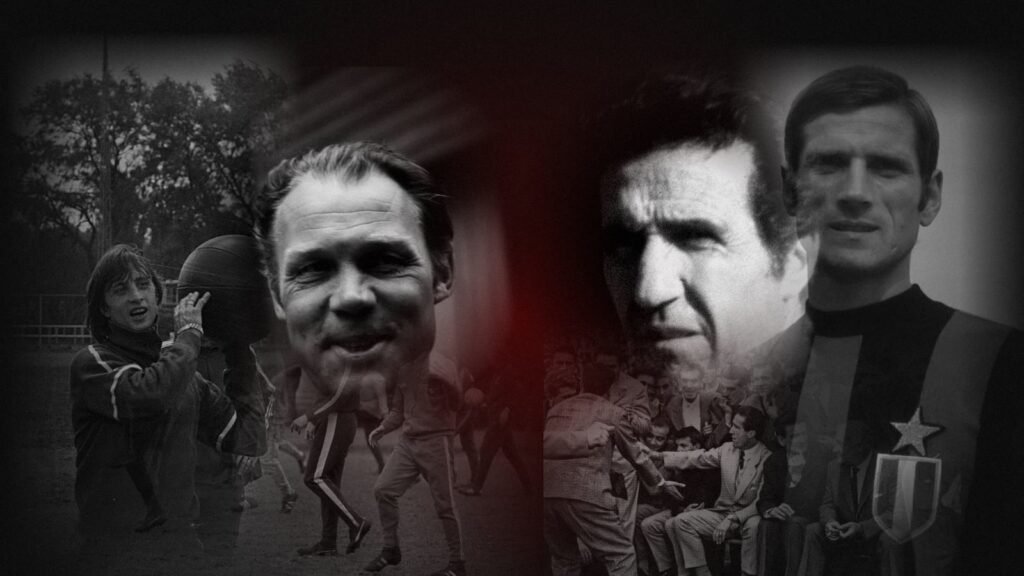
Rotterdam, 31 May 1972. Ajax against Inter in the European Cup final, and for ninety minutes the ball barely leaves the Italian half. Inter defend the way they have been taught to defend, with men marking men and a spare one sweeping up behind them. It works for one half. Two minutes after the break, Johan Cruyff scores. Late on, he scores again. Ajax win 2-0, and the next morning the Dutch newspapers write about the destruction of catenaccio.
That final is usually told as a funeral. The old Italian way of locking the door had met the future and lost. But the argument behind that night, Total Football vs Catenaccio, is older than Cruyff and still has not been settled. Is football won by the team that controls the ball, or by the team that controls the space? Every coach you have ever argued about has picked a side in it, whether they say so or not.
This is the argument from the beginning, explained properly, with a verdict at the end.
The Bolt on the Door
Catenaccio means door-bolt. The idea did not even start in Italy. In 1932 an Austrian coach called Karl Rappan, working at Servette in Geneva, came up with what the Swiss called the verrou, the lock. He pulled one defender back behind the others as a last line, a man whose only job was to close the door.
Italian coaches took that idea and made it their own in the 1940s, at small clubs who needed a way to survive against bigger ones. Gipo Viani’s Salernitana used a version of it. Nereo Rocco took Triestina, a modest club, level on points with Milan and Juventus in Serie A in 1947-48, and later did something similar with Padova.
The shape was simple to describe and brutal to play against. Behind a line of man-marking defenders stood the libero, the free man, who marked nobody. He swept up every loose ball and every striker who got past his marker. In front of him, every attacker had a shadow. When the ball was won, it went forward fast and long, and a team that had spent eighty minutes defending could win the match with one counter-attack.
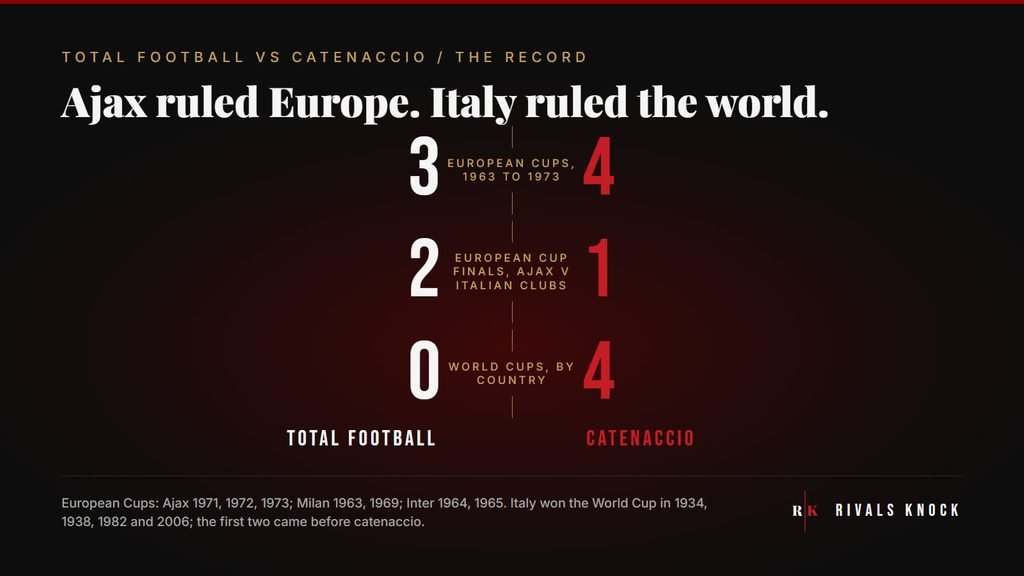
Rocco took the system to Milan and won the European Cup with it twice, beating Benfica 2-1 at Wembley in 1963 and Ajax 4-1 at the Bernabéu in 1969. Remember that second score. Ajax were the team in that final with the new ideas, and catenaccio beat them comfortably.
Herrera’s Inter
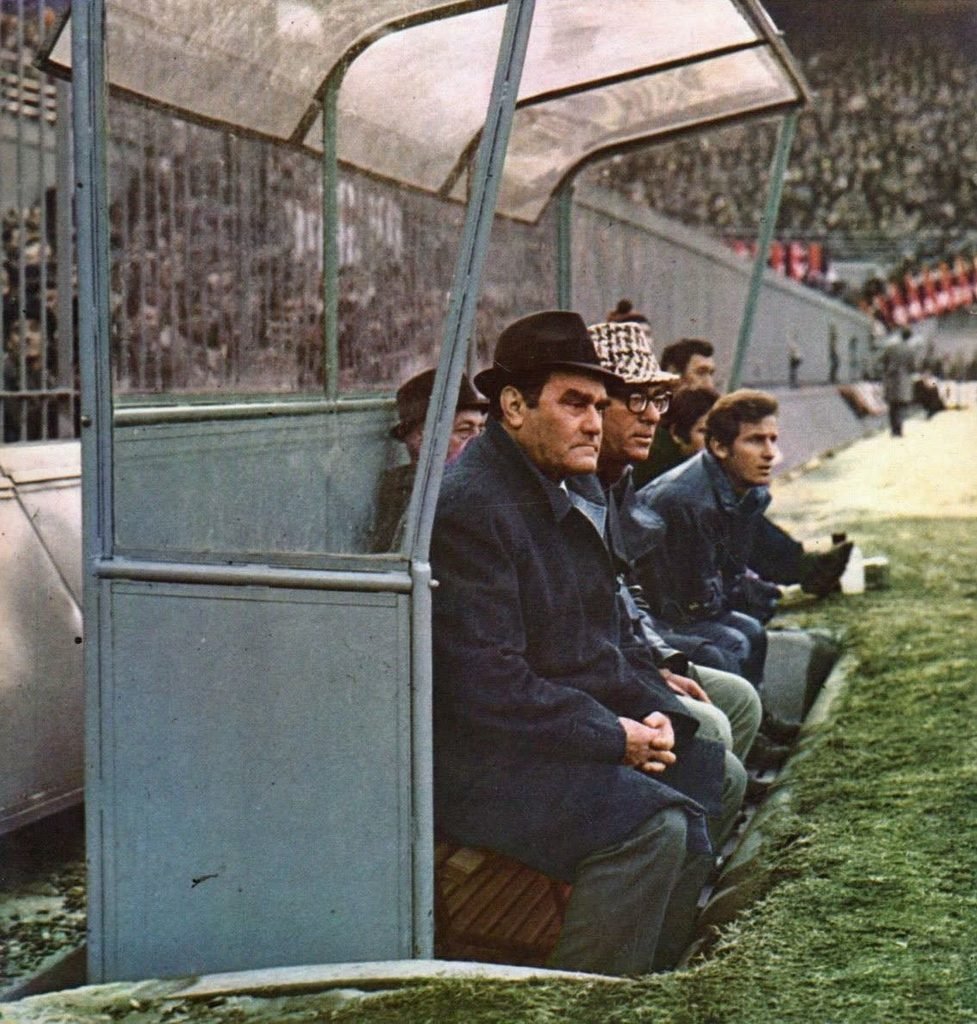
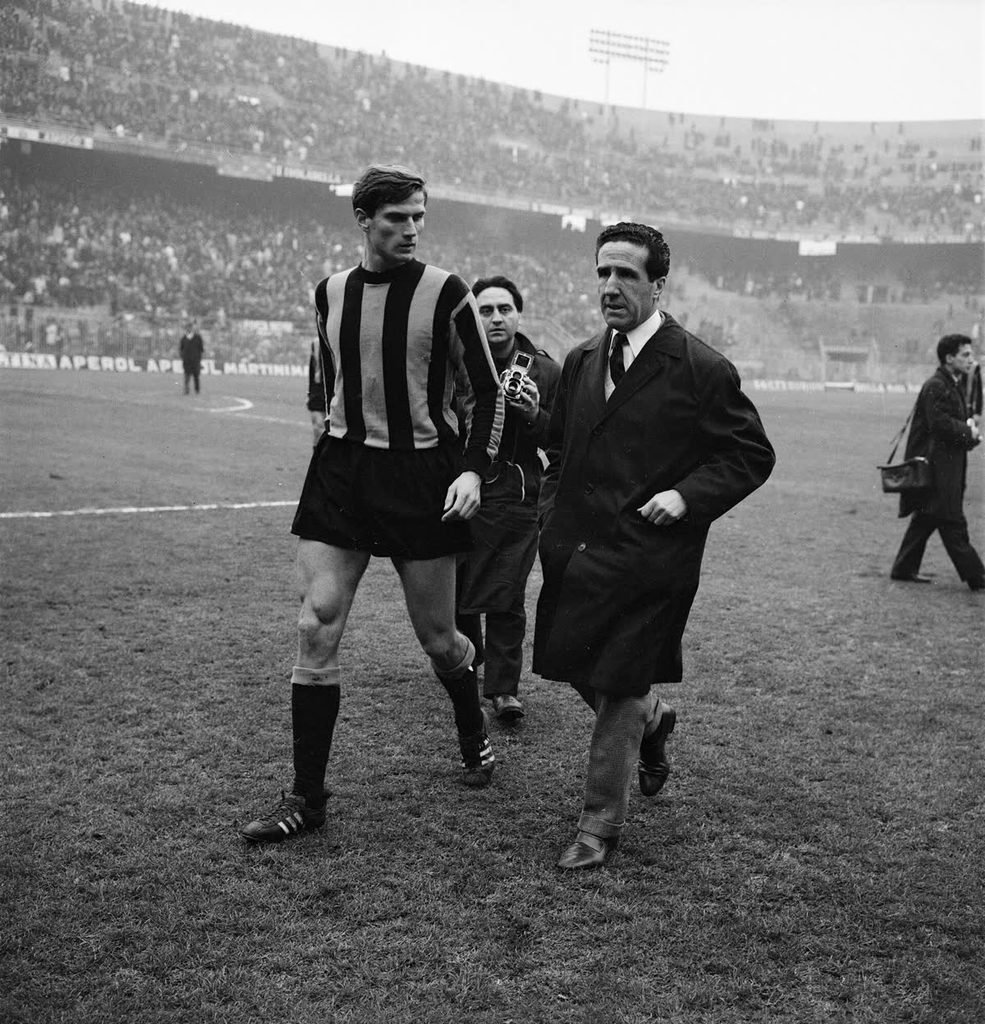
The man who turned catenaccio into a legend was Helenio Herrera, an Argentine born in Buenos Aires who had already won two league titles with Barcelona. He arrived at Inter in 1960, and he ran the club like nobody had run a football club before. Players were locked away in a country hotel before matches, the ritiro. Their diets were controlled. His slogans hung on the dressing room walls.
On the pitch his Inter played a 5-3-2 with Armando Picchi as the sweeper and four markers in front of him. But the part people forget is Giacinto Facchetti, a left-back who attacked like a winger. Herrera always insisted his system had been copied badly. The teams that copied him, he said, “forgot to include the attacking principles that my Catenaccio included.”
It worked better than anything in Europe. Inter won Serie A three times and the European Cup twice in a row. The first of those finals, in Vienna in May 1964, is one a Madridista cannot skip. Real Madrid had won the first five European Cups. They had Di Stéfano, Puskás and Gento. Inter beat them 3-1, with two goals from Sandro Mazzola. A year later Inter beat Benfica 1-0 in their own San Siro and kept the trophy.
Catenaccio asked one question: can you score against eleven men who refuse to be beaten? For a decade, almost nobody could.
Celtic could. In the 1967 European Cup final in Lisbon, Inter scored early and did what they always did: they sat back. Celtic kept attacking and won 2-1. It was the first time a team that refused to stop attacking had broken catenaccio in a final. Five years later, Ajax would do it for good.
The Dutch Answer
The answer came from Amsterdam, and it had been growing there for a long time. An Englishman, Jack Reynolds, had coached Ajax in a fluid, passing style in the 1940s. One of his players was Rinus Michels. When Michels came back as manager in 1965, he built a team in which positions stopped meaning very much at all.
That is the whole idea of Total Football. Any outfield player can take over any other player’s job. If the full-back runs forward, a midfielder drops into his place. If the centre-forward drifts into midfield, someone else arrives in the box. The team keeps its shape while the people inside the shape keep moving. It sounds like chaos. It was the opposite. The Ajax defender Barry Hulshoff later explained what they talked about all day: “Cruyff always talked about where to run and where to stand, and when not to move.”
Cruyff was the centre of it, a centre-forward on the team sheet who turned up everywhere. Against a system built on man-marking, that was poison. Catenaccio needed to know who to mark. Total Football never told it.
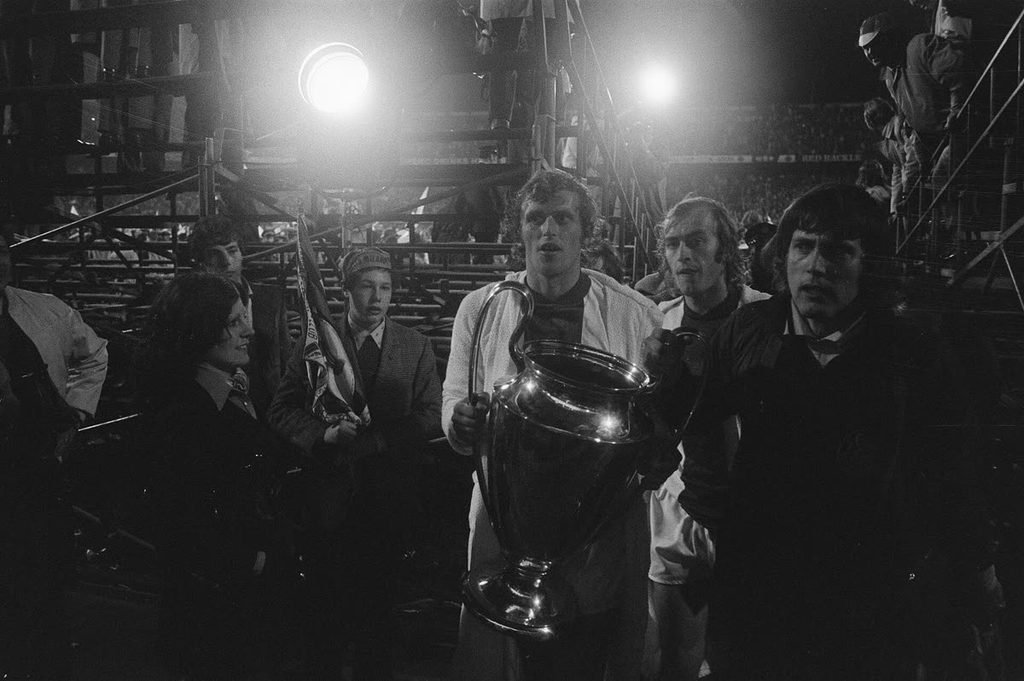
Ajax lost that 1969 final to Milan and learned from it. Then they won the European Cup three years running. They beat Panathinaikos 2-0 at Wembley in 1971, Inter 2-0 in Rotterdam in 1972 and Juventus 1-0 in Belgrade in 1973. In the 1973 European Super Cup they beat Milan 6-1 on aggregate. Inter, Juventus, Milan: three Italian giants, one after another.
Why the Dutch Never Won the World Cup
If the story ended there, it would be easy. It does not. Total Football’s greatest weakness is in the record books, and Italian fans have every right to point at it.
In 1974 the Netherlands reached the World Cup final in Munich and scored from a penalty before West Germany had touched the ball. Then Berti Vogts took Cruyff out of the game, the Germans took the midfield, and West Germany won 2-1. In 1978 the Dutch reached the final again and lost to Argentina after extra time. In 2010 they reached a third final and lost to Spain, again after extra time. Three finals. No trophy.
Italy have won the World Cup four times. The first two, in 1934 and 1938, came before catenaccio existed. But the 1982 team was built on what the Italians called zona mista: their own marking game, blended with the zonal ideas that had come from the north. Gaetano Scirea was the sweeper. Catenaccio had not died in Rotterdam. It had adapted. It won again in Berlin in 2006, and at Wembley at the European Championship in 2021, with a back line that still treated defending as an art.
So the scoreboard is awkward for the romantics. The beautiful idea won the European Cups. The stubborn idea won the World Cup, twice.
The Children of Both
The strangest twist is that the next great Italian team was Dutch at heart. Arrigo Sacchi had never played professional football and had worked as a shoe salesman. When people mocked him for it, he answered: “I never realised that in order to become a jockey you have to have been a horse first.” At Milan from 1987 he threw out the libero, played a 4-4-2 with zonal marking, a high line and relentless pressing, and built it around three Dutchmen: Gullit, Van Basten and Rijkaard. Milan won the European Cup in 1989 and 1990, beating Steaua Bucharest 4-0 and Benfica 1-0.
Cruyff, meanwhile, took his ideas to Barcelona as a coach. In 1992 he gave the club its first European Cup, at Wembley, with a Ronald Koeman free kick in extra time against Sampdoria. In midfield that night was a skinny young Catalan called Pep Guardiola.
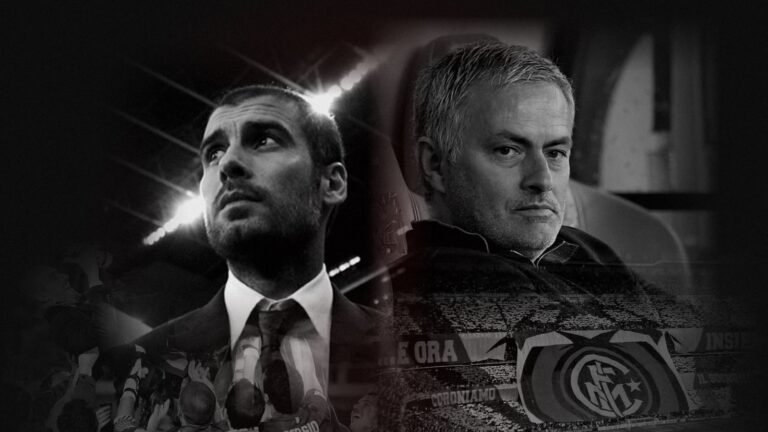
You know where that leads. Guardiola’s Barcelona was Cruyff’s idea taken as far as it could go. And the man who stopped it most famously was José Mourinho. His Inter defended for their lives at the Camp Nou in April 2010 and went through to a final they won in Madrid. If you want the modern version of this argument, it is the one in our story of the war between Guardiola and Mourinho.
Where Total Football vs Catenaccio Stands Now
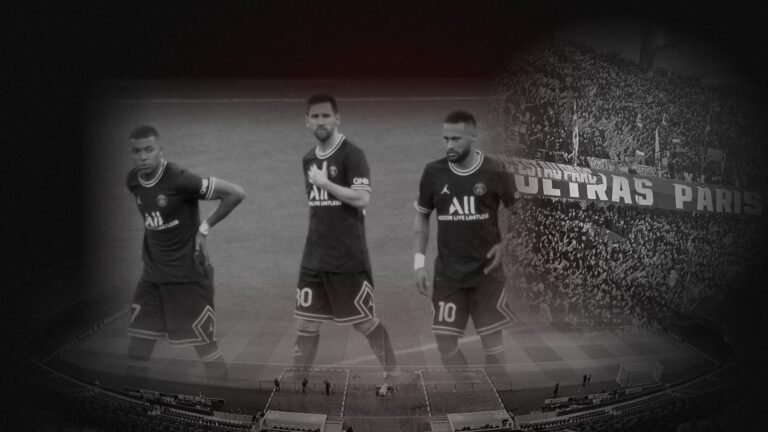
In July 2026, Spain won the World Cup, beating Argentina 1-0 after extra time in New Jersey. Their football is the grandchild of Cruyff’s Barcelona: possession, short passes, everybody comfortable on the ball. Paris Saint-Germain have won the last two Champions Leagues pressing high and moving as a unit, and the first of those finals, in Munich in 2025, was a 5-0 win over Inter.
Italy, the home of the door-bolt, did not even reach the 2026 World Cup. It is the third tournament in a row they have missed.
But look closely at any of those modern teams and you will find catenaccio inside them. Nobody wins without a compact block when the ball is lost. Every pressing team is defending space, which is exactly what the Italians spent forty years perfecting. The man-marking died. The obsession with not conceding did not. It just learned to run forward.
The Verdict
If the question is which idea won the argument about how football should be played, it is not close. Total Football won. Every top coach today wants players who can do more than one job, a team that keeps the ball and a press that wins it back. That is the Dutch idea, and it has spread from Amsterdam to Barcelona to Manchester to Paris.
But catenaccio deserves far more respect than the Rotterdam funeral story gives it. It won two European Cups with Milan and two with Inter, and its defensive tradition carried Italy to the World Cup in 1982 and 2006. It beat the great Real Madrid. It taught football that defending is a skill, not a punishment. And it won the one trophy the Dutch never could.
Total Football won the future. Catenaccio won the finals that mattered most to its own people. The best teams of today are both at once.
Your turn. Pick your side.
Sources: Wikipedia (Catenaccio, Total Football, Helenio Herrera, Arrigo Sacchi, the 1964, 1972 and 1992 European Cup finals, the 2026 World Cup final, Italy national football team), UEFA. Facts checked 14 October 2026.
The debate
No arguments yet. Start one.
Argue hard, respect the other side. Attack the argument, never the person. Comments that cross that line get removed.